
From One Game to a Toolkit: Extracting Reusable Platformer Architecture With AI
Published:
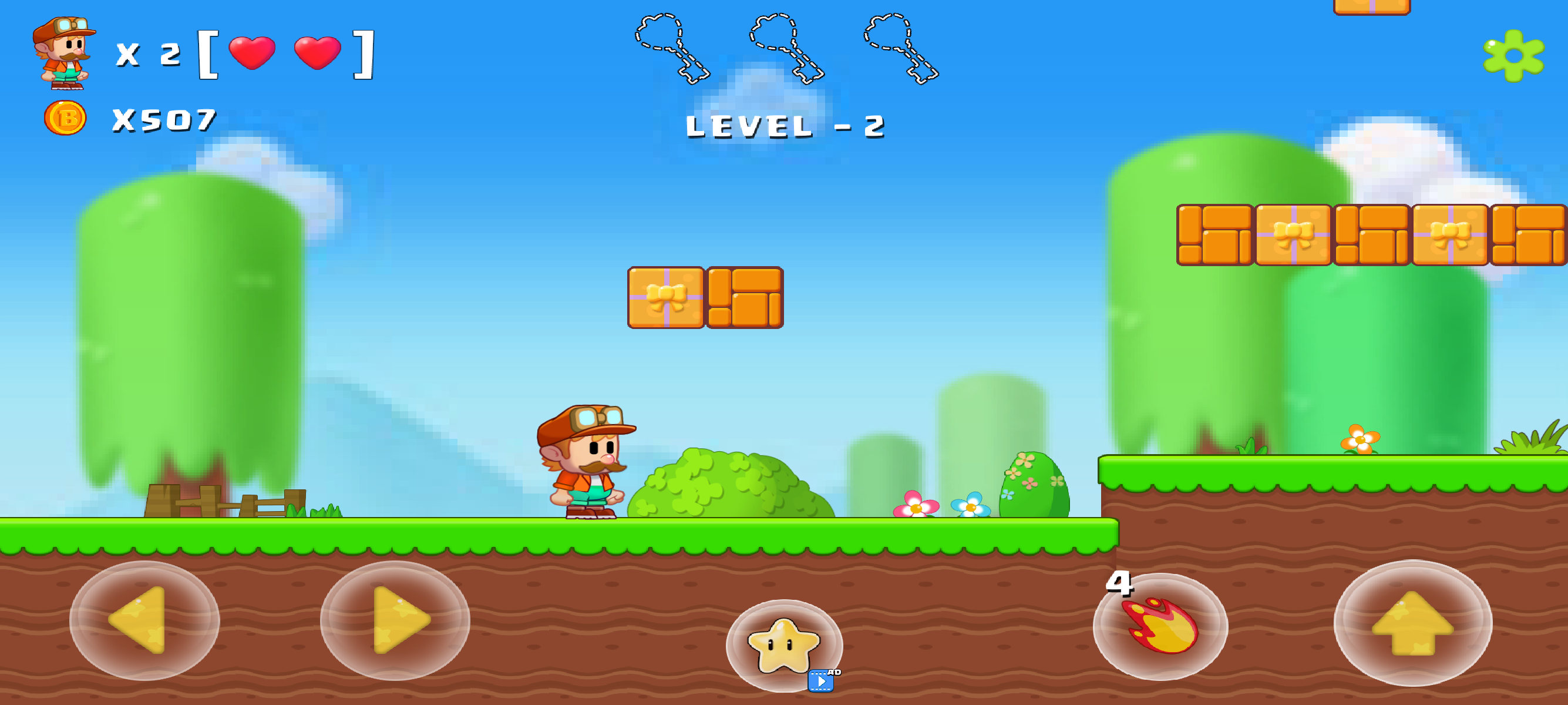
This is post #37 in the Super Morse series — the engine-architecture deep dive. If you haven’t read the overview post, the short version: one Android app, two problems — porting a Mario clone onto my own decade-old libGDX fork, and executing behavior recovered from a decompiled, unrelated platformer safely. Both problems turned out to be architecture problems before they were content problems.
TL;DR
- The Mario port sits directly on the Guidebee Game Engine (GGE), a ~2013-era fork of libGDX’s MIDP-style
microeditionAPI (LayerManager/Sprite/TiledLayer) — the same layer my Flappy Bird and Battle City clones already use. - With Phase 2 of the Mario port functionally done, the next move isn’t “build a second game” — it’s a proposed extraction: pull the genuinely reusable ~60% of Mario’s code into a
platformertoolkit package, so a future platform game doesn’t start by copy-pastingactivity/mario/and rewriting most of it. - For the reverse-engineered game, the harder architectural problem was different: how do you safely execute behavior recovered from someone else’s obfuscated bytecode, without either reimplementing their entire VM or trusting a translation layer you can’t verify? The answer is a small, purpose-built compiler and two tiny VMs — not a general scripting language.
- Both designs share one instinct an AI assistant turned out to be unusually disciplined about enforcing: never genericize the one thing that should stay hand-tuned — movement feel in one case, Java-verified game mechanics in the other.
Problem One: When Does “Working Code” Deserve a Refactor?
The Mario port’s gameplay code (activity/mario/) sits on GGE the same way Flappy Bird and Battle City do — nothing new there. What’s new is asking: if I built a second, unrelated platform game next, how much of Mario’s code could I actually reuse unchanged?
The honest answer, audited class by class rather than guessed, was “less than it looks like, but more than nothing.” Sorting every class in activity/mario/ by how much rework moving it to a shared layer would need turned up three clean buckets:
Already generic — move verbatim. TileMovement’s wall/floor/ceiling clamp math, an OscillatorClock timer utility, a CameraController that’s parameterized entirely by constructor arguments, and the “one static method per interaction pair, called in a fixed order” collision-resolver pattern — none of these read a Mario-specific constant anywhere in their body.
Generic shape, game-specific data — extract as a parameterized base. A score/coins/lives controller is really “a counter with a coin→life threshold,” three named constants away from reusable. A save-state class is “a set of cleared level IDs behind Preferences,” one hardcoded string away. The pattern repeats across the menu screen, the HUD, and the debug panel.
Genuinely game-specific, but worth a real extension point. Player’s physics constants (jump arc, run speed, water-mode gravity) are Mario’s own tuned feel and stay put — deliberately. Its scaffolding (invincibility timers, morph-transition flipbook machinery, checkpoint/respawn logic) is a different story: none of it reads a Mario-specific constant either, so it becomes an abstract PowerStateActor<S extends Enum<S>> base class with one abstract method, applyMovement, that a future game’s player character must supply itself:
public abstract class PowerStateActor<S extends Enum<S>> extends Layer {
    protected S powerState;
    private float invincibleTimer, shieldTimer;
    private TextureRegion[] transitionFrames;   // morph-flipbook machinery
    private float checkpointX, checkpointY;     // respawn point
    // consumeDeath()/setInvincibleFor()/updateCheckpoint(), all moved verbatim —
    // none of it reads a Mario-specific constant

    /** The one thing a subclass must supply: how to actually move this frame. */
    protected abstract void applyMovement(PlatformerCommand command, float frames);
}
The highest-leverage single change in the whole proposal, though, is turning six hardcoded switch statements — LevelLoader.spawnBricks/spawnEnemies/spawnHazards/… — into a TileTypeRegistry a game populates instead of a loader a game forks:
TileTypeRegistry registry = new TileTypeRegistry()
    .register("Brick", (tile, level, ctx) -> add(ctx, new Brick(tile.x, tile.y)))
    .register("EnemyMushroom", (tile, level, ctx) -> addEnemy(ctx, new EnemyMushroom(tile.x, tile.y)));
A second, hypothetical game writes its own table for its own tile vocabulary — Girder, Drone, BatteryCell — and the generic loader underneath needs zero changes to support it.
The Part I Insisted On: This Is a Proposal, Not a Mandate
Here’s the thing this design doc gets right that I want to call out specifically, because it’s the same instinct I leaned on in the iRobot node-graph design: it says, in its own words, “this restructuring buys zero player-visible benefit for Mario on its own… if there’s no concrete plan or strong intent to build a second platform game in this app, the honest recommendation is: don’t do this yet.”
That’s not hedging — it’s the correct answer to “should we abstract this,” and it’s a harder answer for an AI assistant to hold onto than you’d think, because “propose an elegant reusable architecture” is a much more satisfying deliverable than “here’s a design, and here’s why you shouldn’t build it yet.” The whole proposal is still gated behind a Phase H: build a small, throwaway second game on top of the toolkit before calling any of it stable — the standard “wait for the second real use case” discipline for avoiding a plausible-but-wrong abstraction. As of today, nothing in Phase A–H has actually shipped; the toolkit stays a design doc until a real second game gives it something to prove itself against.
Problem Two: Executing Someone Else’s Recovered Behavior, Safely
The reverse-engineered game’s engine problem looks nothing like the Mario one on the surface, but it rhymes. The original game (call it Super Bob Go) isn’t just Java actor classes — it’s a data-driven engine: binary scene programs coordinate stage-wide behavior, binary actor-resource rules define reusable per-actor state machines, and a Java runtime turns numeric condition/action type IDs into engine operations. I want to recreate that separation of concerns — content as data, mechanics as verified Java — without copying the original’s obfuscated authoring format or its bugs.
The architecture that fell out of that goal is a compiler/VM pipeline:
semantic scene/actor documents
          |
          v
validator + compiler + linker
          |
          v
typed immutable runtime IR
          |
          v
scene VM + actor VM ----> typed Java engine services
                              |
                              v
                 physics, collision, animation,
                 camera, audio, UI, spawning, saves
A few decisions here were non-negotiable early, and stayed that way through the whole design:
- Rules are orchestration, not mechanics. A rule can say “when the hero touches this, trigger a stomp” — it never re-implements what a stomp is. Physics, collision, and damage all stay behind typed Java services the rule layer merely calls.
- Exactly one mutating authority per actor, ever. A given actor placement is driven by hand-written Java, by interpreted legacy rules recovered from the original binary, or by new authored rules I write myself — never two at once. A
SHADOW_COMPAREmode lets a candidate rule run non-mutating, side-by-side, purely to compare its intended output against the live authority — which is how a resource gets certified before its authority is ever switched. - Scene rules and actor rules get separate instruction registries. Their legacy numeric IDs and execution contexts genuinely differ in the original engine; pretending they’re one instruction set would just reintroduce the obfuscation I’m trying to get rid of, with extra steps.
- The editor is not allowed a second interpretation of runtime semantics. Anything the future authoring tool previews must invoke the exact same compiler and Java services the shipped game runs — never a parallel, editor-only physics implementation that can quietly drift from what actually ships.
This is still a proposed target architecture, not implemented — Phase 0 of its own six-phase rollout is where things stand today: viewers stay read-only over the legacy programs, provenance gets preserved, and coverage inventories get generated, before a single line of the actual VM gets written.
The Common Thread
Both designs above got the most valuable pushback from the same place: forcing an explicit answer to “would a second, unrelated consumer plausibly want this exact code, unchanged?” For the Mario toolkit, that’s a hypothetical second game, deliberately deferred to a real Phase H before being trusted. For the rule engine, it’s sharper — the “second consumer” is a decompiled binary I don’t get to redesign, so the compiler has to swallow whatever the legacy format actually did, correctly, while still giving new content a clean, semantic authoring surface on top. Getting an AI assistant to hold both halves of that — respect the old evidence, don’t let it contaminate the new design — turned out to be the real architectural work.
Related Posts
- Building a Mario-Like Platformer — and Resurrecting Three Lost Android Games — the series overview
- Tuning the Jump Arc: Movement Physics, Recovered and Designed — where these architectural boundaries (movement feel vs. scaffolding) get put to use
- Reviving iRobot: An Old Android Project, Six Years Later, With AI Agents as Co-Developers — the same “propose it, then insist on proving it” discipline, applied to a node-graph editor instead
Connect
- GitHub: guidebee
- LinkedIn: James Shen
This is post #37 in the Super Morse series — five posts on building an AI-assisted platformer and reverse-engineering three abandoned Android games alongside it.