
Tuning the Jump Arc: Platformer Physics, Recovered and Designed
Published:
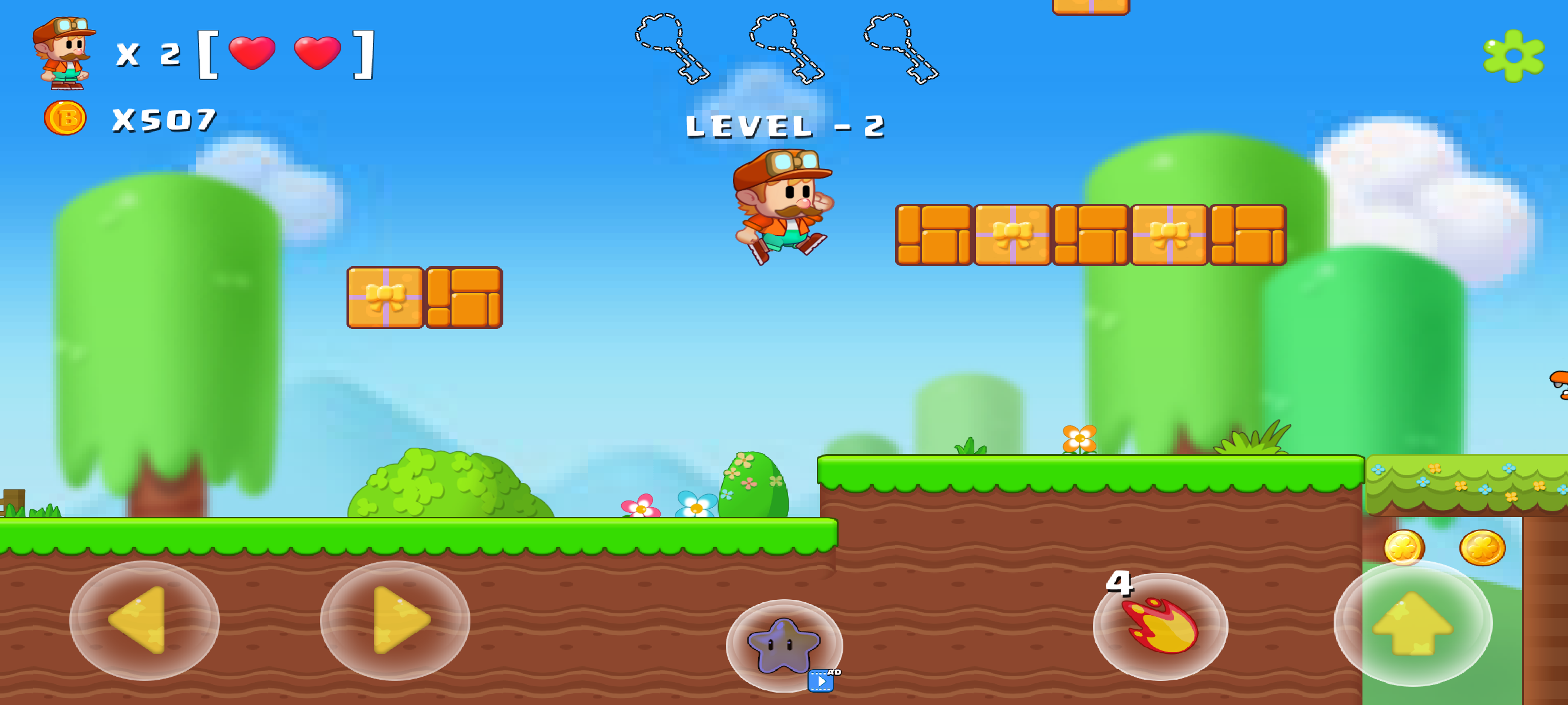
Post #38 in the Super Morse series. If a platformer has one system where “close enough” isn’t good enough, it’s movement — players feel a wrong jump arc within seconds, even if they can’t name what’s off about it. This post is about two very different ways I ended up with trustworthy movement numbers: one game where I already knew the constants and just had to carry them over faithfully, and one where the constants had to be excavated from a decompiled binary, one guarded state transition at a time.
TL;DR
- Mario’s movement constants (
MAX_SPEED=60,GRAVITY_STEP=0.42,JUMP_BASE=-11, …) are carried over verbatim from the original desktop Java game, expressed in a “per 60fps tick” unit rather than px/sec — deliberately, so the port’s feel can never silently drift from what I already knew was right. - The reverse-engineered game’s movement constants had no such source of truth — they had to be recovered from a decompiled actor-rule VM, one guarded state transition at a time, and graded by confidence the whole way.
- The recovered result includes some genuinely counter-intuitive facts a naive port would have missed entirely: asymmetric left/right deceleration, a hold-to-sustain jump with an exact 16-update window, and a gravity divisor that only applies while entering water while falling.
- In both games, the design principle holds: movement feel is the one thing a shared engine layer should never try to derive automatically.
Mario: Keep the Numbers, Change Everything Around Them
Player is the largest single class in the Mario port (~1,150 lines) and the one I was most careful not to “improve” during the port. Its physics constants were tuned years ago in the original desktop game, implicitly assuming a fixed ~60fps loop:
| Constant | Value | Meaning |
|---|---|---|
ACCEL | 2 | Horizontal acceleration per tick |
MAX_SPEED / MAX_SPEED_TURBO | 60 / 100 | Run cap, normal vs. run-button-held |
GRAVITY_STEP / GRAVITY_CAP | 0.42 / 10 | Per-tick fall acceleration and terminal velocity |
JUMP_BASE | -11 | Base jump impulse, plus a speed-scaled bonus/penalty |
WATER_GRAVITY_STEP / WATER_GRAVITY_CAP | 0.1 / 2 | Sea-level gravity — much gentler |
WATER_JUMP_GRAVITY | -3.5 | A tap-to-paddle impulse, no on-ground gate |
Rather than re-derive each of these into a px/sec figure for a modern delta-time loop, the port keeps every constant exactly as written and scales it by frames = delta * 60 each frame — “how many original 60fps ticks did this real frame cover.” At exactly 60fps that’s the identical formula the original game used; the one rule for anyone tuning feel later is to keep working in that per-tick unit, never px/sec, because that’s what every existing constant is expressed in.
That single design decision — preserve the unit, not just the value — is a small thing that would have been easy to get subtly wrong under time pressure, and it’s exactly the kind of detail an AI assistant is good at holding onto consistently across a thousand small edits, once it’s stated once and written down.
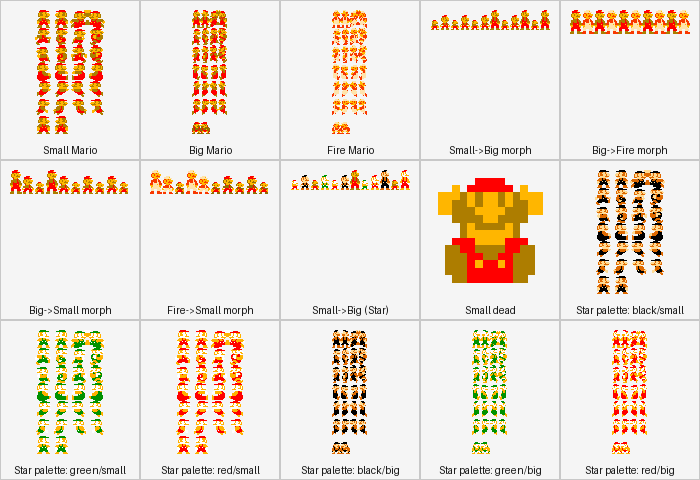
The three power states (Small/Big/Fire) layer on top of that same physics core without changing it: growing/shrinking swaps the whole frame strip and hitbox size, gated behind a short transformation animation, and taking a hit demotes you one step (Fire → Small directly, not Fire → Big → Small) — a genre convention, not a physics change.
The Reverse-Engineered Game: When the Constants Are Buried in Bytecode
The other game had no such source of truth — “Bobby’s” (the player character) movement had to be recovered from a decompiled Spine-skeleton actor and its accompanying rule set, and the first pass at this got embarrassingly far from correct before the evidence caught up with it. An earlier round of research had assumed no acceleration, fixed jump height — a completely plausible read of a 20-year-old mobile platformer. The actual decompiled rules said otherwise, and the correction is worth walking through because of how it got found, not just what it found.
Horizontal movement has separate left/right accumulators, not one velocity. Holding a direction ramps an accumulator toward a cap (10 for the default hero, 13 for some others) at +1 every 3 updates; releasing coasts it back toward zero — but not symmetrically:
Golden fixture, from a standing start:
  Holding either direction reaches magnitude 10 at update 30.
  Right release from cap reaches zero after 21 updates.
  Left release from cap reaches zero after 30 updates.
That’s a recorded, reproducible left/right asymmetry in the original’s deceleration — not a bug I’m choosing to preserve out of nostalgia, but a fact I’d have simply never invented if I’d designed the movement from scratch, and would have quietly erased if I’d “cleaned up” the numbers into something that looked more symmetric and reasonable.
Vertical movement is a seven-state machine, not a boolean “grounded.”
| State | Meaning |
|---|---|
| 0 | Inactive/no-gravity context |
| 1 | Ascending |
| 2 | Ascent-ended / head-hit transition |
| 3 | Descent beginning |
| 4 | Descending |
| 5 | Floor-contact transition |
| 6 | Grounded |
Jump itself has a hold-to-sustain contract with exact numbers: a grounded jump impulse of 28, a 16-update sustain window while the button stays held (writing vertical speed 21, or 24 above horizontal speed 9 — a speed-scaled jump, same instinct as Mario’s own JUMP_BASE bonus), and release simply stops the sustain writes rather than applying some invented “jump-cut” multiplier that would’ve been a reasonable guess but isn’t what the source does.
Water entry has a one-time discontinuity, not a smooth transition. Entering water while already descending divides the current vertical speed by 4 on that single tick, then gravity drops to 1.8 (from a 2.0 baseline) for as long as you’re submerged. A naive “swimming = low gravity” implementation would have missed the entry-tick speed division entirely and produced a visibly different splash-down feel.
Every one of these facts carries the same evidence discipline from the overview post: recovered (read straight from the decompiled class), inferred (fits every observed rule, not named by the code), or still undecoded. The jump-hold numbers above are recovered; exactly which in-game event maps a “fast run” animation variant to a real gameplay state is still marked unresolved rather than papered over with a plausible guess.
Why Keep Reading Someone Else’s Numbers At All?
The honest reason isn’t “faithful ports are morally superior.” It’s narrower: movement feel is almost impossible to get right by intuition alone, and this particular studio had presumably already spent real playtesting hours tuning theirs. Recovering their numbers exactly — including the asymmetric release cadence I would never have chosen to design — means the new game inherits that tuning for free, and I get to spend my own design effort on the parts that are actually new (level layouts, a different actor roster, an original story) rather than re-discovering “how floaty should a jump feel” from scratch through trial and error.
That’s also exactly why the architecture post in this series draws such a hard line around never letting a shared engine layer auto-derive physics constants from tile size or genre convention. A PowerStateActor base class can share timers, checkpoints, and morph-transition machinery across two different games for free — but the moment it tries to share applyMovement itself, or auto-scale gravity to match a chosen tile size, it’s making a feel decision on behalf of a game it’s never been played. Two different platformers with the same tile-size-relative jump height can still feel completely different relative to their own gap widths and enemy heights — there’s no formula that reconciles that automatically, only a human (or, in this project’s case, a decompiled binary that already did the reconciling) actually playing it.
Related Posts
- Building a Mario-Like Platformer — and Resurrecting Three Lost Android Games — the series overview
- From One Game to a Toolkit: Extracting Reusable Platformer Architecture — why movement feel stays outside the shared layer
- Giving NPCs a Brain: Enemy Design and Reverse-Engineered Actor Rules — the same recovered-rules discipline, applied to enemies instead of the player
Connect
- GitHub: guidebee
- LinkedIn: James Shen
This is post #38 in the Super Morse series — five posts on building an AI-assisted platformer and reverse-engineering three abandoned Android games alongside it.